

A digital product side hustle means creating files you make once and sell repeatedly, like templates, printables, or ebooks, with no inventory or shipping. You can start for under $50. Most beginners earn little at first, then a few hundred dollars a month once they solve a specific problem buyers already search for.
Search this topic and you get two answers that cannot both be true. One is a video thumbnail promising $34,000 a month. The other is a Reddit thread arguing about whether anyone makes real money at all.
So which is it?
Both, sort of. A few sellers do very well. Most make a handful of sales and stop. The gap between them is rarely talent or luck. It is usually a few unglamorous decisions made early: what to sell, who to sell it to, and where to put it so buyers find it.
I have spent years around digital sellers and the checkout side of this business. This guide skips the hype and the doom. You will get honest income numbers, the product types that work for beginners, real fee math on where to sell, and the mistakes that keep most people stuck at zero.
Key Takeaways
- Income is real but modest at first: most sellers earn little for the first few months, and the five-figure-a-month screenshots are the rare top of the curve, not a typical result.
- Boring niches out-earn flashy ones: a plain spreadsheet that solves one specific problem usually beats a beautiful product nobody searches for.
- One finished product beats ten half-built ones: pick a single problem you can solve and ship it before moving on.
- Where you sell is a fee decision: marketplaces hand you traffic but take a cut, while your own checkout keeps more of each sale if you bring the buyers.
- An email list is the multiplier: the sellers who last collect buyers they can reach again, instead of starting from zero every launch.
Can You Actually Make Money With a Digital Product Side Hustle?
Start with the honest answer, because most guides bury it. Yes, people make money selling digital products. No, it is not passive, and it is not fast for almost anyone.
The doubt is easy to find. One popular thread in r/sidehustle asks point blank whether anyone is actually making money with digital products, and the answers are honest and mixed. That question is the right place to start.
Before the numbers, one shortcut: the free 5-day Online Selling Mistakes Challenge walks through the profit leaks that catch most new sellers, so you can skip the errors that sink early attempts.
Here is what the income actually looks like. Surveys across the creator economy keep landing in the same place: roughly half of creators earn only a few thousand dollars a year, and only a small single-digit share ever clear six figures. Shops selling digital products tend to average a few thousand dollars a month in revenue and a few hundred in profit. That is a real side income, not a salary replacement.
About those highlight reels. The five-figure-a-month screenshots are real for the people posting them, but they are the rare top of the curve, usually built on an audience that took years to grow. Treating them as your month-three forecast is how most beginners end up quitting.
A realistic first 90 days is quieter. You make nothing for the first few weeks while you build and list. Your first sales trickle in from people who found exactly what they needed. If you picked a real problem and put your product where buyers already search, a few hundred dollars a month within the first year is a solid, normal outcome, the same honest range you see across most businesses you can run solo. From there it compounds slowly, as you add products and collect an audience.
What Counts as a Digital Product (and the Types That Sell)
A digital product is any file or access you sell and deliver online, with nothing to ship. You make it once and software handles delivery while you sleep. The no-inventory part is genuinely real. The no-work part is not.
For a beginner, a few categories punch above their weight because they are fast to make and easy to buy:
- Printables: planners, checklists, worksheets, wall art. Built in Canva, delivered as PDFs.
- Templates: Notion setups, spreadsheet trackers, resume layouts, social media kits. You sell the structure, the buyer fills in the details.
- Ebooks and guides: a focused PDF that teaches one thing well.
- Design assets: Lightroom presets, fonts, icons, Procreate brushes for creators and photographers.
- Online courses: higher effort and later-stage, but the highest ceiling once you have an audience.
Notice what these share. Each solves a narrow problem for a specific person. If you want the full range, this list of 100 digital product ideas covers seven categories, and the breakdown of what digital products are goes deeper on formats and delivery. For your first product, pick the category closest to a skill you already have.
Why Boring Niches Out-Earn Flashy Ones
This is the part most beginners get backwards. The flashy product is usually the wrong one.
A beautifully designed wellness planner sounds great. The trouble is that thousands of people had the same idea, and almost nobody searches for it by name. A plain spreadsheet that tracks mileage for real estate agents sounds dull. It also has steady demand, little competition, and buyers who will happily pay $29 because it saves them a real headache.
Dull niches win for three reasons. Specific problems come with specific searches, so buyers find you without shouting on social media. They scare off competitors who only want to make pretty things, which leaves room. And practical products age slowly, so the same file keeps selling for years with light updates.
Side Hustle School has documented sellers quietly earning six figures from unglamorous spreadsheet products, the kind nobody posts about. The pattern repeats everywhere: the money is in usefulness, not looks.
So when you brainstorm, do not ask what would be fun to make. Ask what specific person has a specific problem you can solve in a file. The narrower, the better. A budget template is crowded. A budget template for freelance wedding photographers is a business.
How to Pick and Validate Your First Product
You do not need a brainstorming session. You need to notice a problem you have already solved.
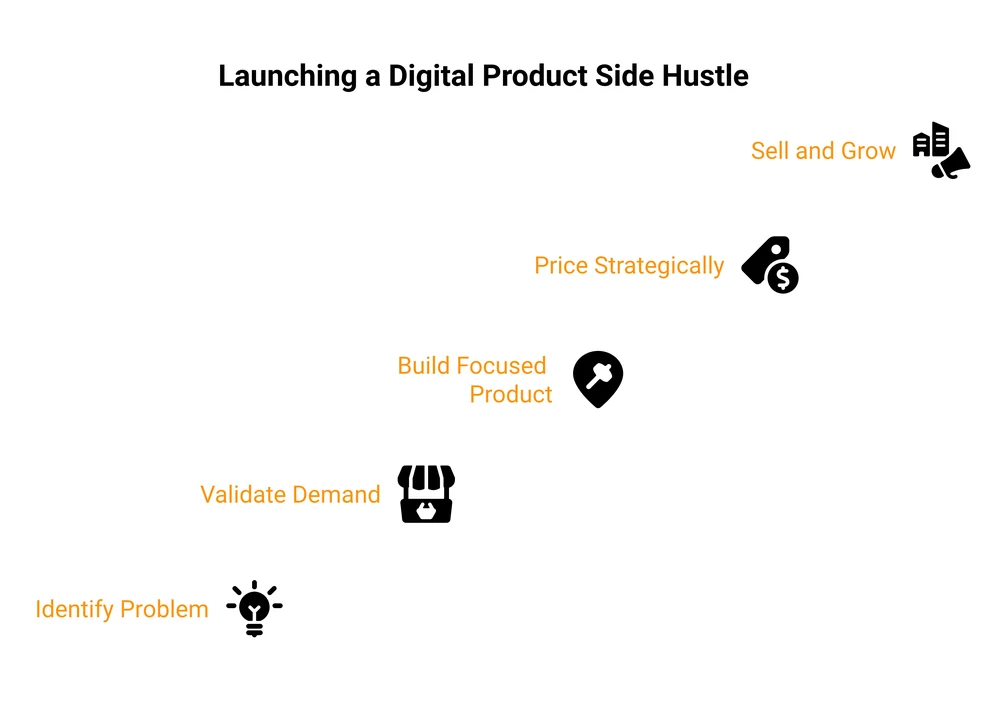
Three steps get you to a validated idea without guessing.
First, mine your own experience. What have you built for yourself, figured out at work, or been asked about twice? The spreadsheet you made to manage your own freelance invoices is a product. The Notion system that runs your week is a product.
Second, check that other people want it. Search the marketplace where it would sell and see if similar products exist with reviews. Reviews are proof of payment, not competition to fear. A category with zero sales history is a warning, not an opening.
Third, validate before you build the whole thing. Make a simple version, or even just a landing page describing it, and see if anyone signs up or asks to buy. A handful of yes responses beats a month of polishing something nobody wanted.
Only then do you build the full product. When you are ready to package and deliver it, this guide on creating digital downloads covers the file and delivery side so buyers get instant access. The order matters: validate, then build. Most people do it backwards and wonder why their finished product sells three copies.
Where to Sell: Marketplaces vs Your Own Checkout
Where you sell is not a branding choice. It is a fee decision, and it changes how much of each sale you keep.
There are two paths. A marketplace like Etsy hands you built-in traffic, millions of buyers already searching, and takes a cut for it. Your own checkout brings no traffic, so you send buyers yourself, but you keep far more of each sale.
This short video walks through the same decision on Etsy, with the real fee math and the fix:
Here is the real math on a single $30 product, using each platform’s current fees.
| Platform | Built-in traffic | Fee per sale | Monthly cost | You keep on $30 |
|---|---|---|---|---|
| Etsy | Yes, large | ~9.5% + $0.45 | $0 | ~$26.70 |
| Gumroad | Some, small | 10% + $0.50 plus processing | $0 | ~$25.33 |
| Payhip (free) | No | 5% + ~2.9% + $0.30 | $0 | ~$27.30 |
| Your own checkout (CartMango) | No | ~2.9% + $0.30 (processor only) | $0 in beta, then from $10/year | ~$28.83 |
Fees verified at each platform’s own page. Etsy’s published fees are a $0.20 listing fee, a 6.5% transaction fee, and 3% + $0.25 US payment processing, all collected by Etsy. Gumroad takes 10% + $0.50 per sale with no monthly fee, and card processing of about 2.9% + $0.30 is charged on top. Merchant of record status covers your sales tax, not the card fee. Payhip’s free plan takes 5% on top of your own Stripe processing of about 2.9% + $0.30, and your own checkout is the processor fee alone. Every take-home figure above already includes processing.
I will be upfront here: CartMango is my own platform, an own-checkout option built so you keep more of each sale, free during beta and then from $10 a year.
The pattern is clear. Marketplaces are worth their cut early, when you have no audience and need Etsy’s traffic to get found. Your own checkout wins once you can send your own buyers, because keeping an extra dollar or two per sale compounds fast at volume. Plenty of sellers run both: a marketplace for discovery, their own checkout for the email list.
You do not even need a website to start. Here is how to sell digital products without a website. And if you are weighing specific tools, this rundown of Gumroad alternatives compares the main options on fees and features.
Pricing Your Digital Product Without Leaving Money on the Table
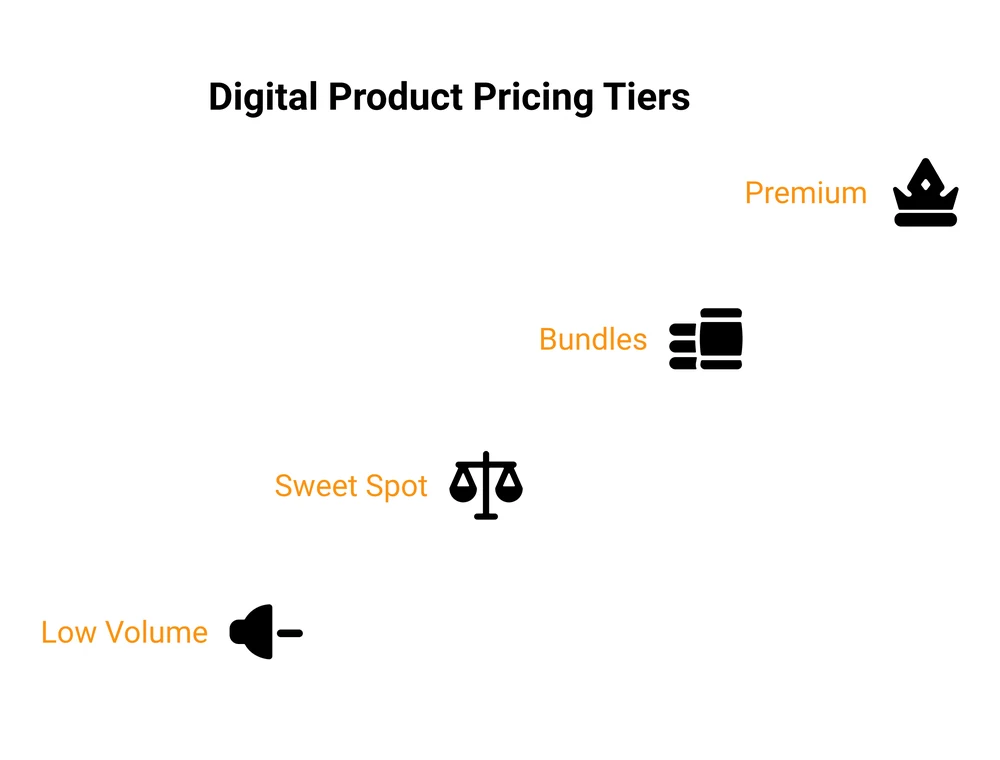
Most beginners price too low, not too high. A $5 product needs ten times the volume of a $50 product to make the same money, and a rock-bottom price can signal low value.
A rough ladder by product type:
- Under $10: small printables and single templates. Fine as a tripwire, but you need real volume.
- $15 to $50: the sweet spot for most templates, printables, and focused guides. High enough to matter, low enough to be an easy yes.
- $50 to $200: comprehensive bundles and toolkits that save serious time.
- $200 and up: position it as a course or a system, not a file.
Price on the value to the buyer, not the hours you spent. A spreadsheet that took you an afternoon but saves an agency ten hours a month is worth far more than $7. Previews, clear descriptions, and a few real testimonials let you charge the higher end of each band. For a full method, see how to price digital products.
Getting Your First Sales
A finished product is half the job. The other half is traffic, and it is the half most people skip.
You have two honest ways to get found, and the best sellers use both.
Let search do the discovery. On a marketplace, that means titles and tags that match what buyers type. On your own site, that means a blog post or a free tool that ranks over time. Search traffic is slow to start and then keeps paying for years.
Build an email list from day one. This is the real multiplier and the thing struggling sellers almost always lack. Offer a small free version of your product, a checklist or a sample, in exchange for an email. Now every launch starts with an audience instead of from zero. A list of 500 buyers you can email beats 50,000 followers you cannot reach.
What rarely works is posting on social media and hoping. A viral post is not a plan, and an audience you rent on someone else’s platform can vanish with an algorithm change. An email list and search rankings are yours.
Set your expectations honestly. The first sales come from solving a real problem and showing up where buyers already look, not from a clever launch. Traction here is measured in months, not days.
Common Mistakes That Keep a Digital Product Side Hustle at Zero
Most failed attempts share the same handful of mistakes. Avoid these and you are ahead of the majority.
Chasing flashy over useful. The pretty product with no search demand loses to the dull one that solves a problem.
Pricing too low out of fear. A $3 tag caps your income and signals low value before anyone opens the file.
Building before validating. Months spent polishing something nobody asked for is the most common way to waste your effort.
Ten half-products instead of one finished one. Spreading yourself thin feels productive and sells nothing. Pick one problem, finish it, then expand.
Ignoring fees when you choose where to sell. The difference between platforms is small per sale and large per year, so do the math before you commit.
A digital product side hustle is not a lottery ticket, and it is not a scam. It is a small business with unusually good margins and an unusually slow start. The sellers who win are not the most talented. They are the ones who picked a real problem, shipped one good product, and kept showing up while everyone else quit in month two.
FAQ
What is the most profitable digital product to sell?
There is no single most profitable type. Profit follows a specific problem and an audience that searches for it, not a category. In practice, plain utility products like spreadsheet templates and niche printables often out-earn glossier categories because they have steady demand and less competition. The most profitable product is the one that solves a real problem for a buyer who is already looking for the answer.
Can you really make $10,000 a month with a digital product side hustle?
It is possible but not typical, and almost never fast. Five-figure months sit at the top of a long tail and usually come from stacking several products on top of an email list built over years. A more honest first-year target is a few hundred dollars a month, growing as you add products and grow an audience. Treat $10,000 a month as a ceiling, not a starting point.
Is it realistic to make $2,000 a day selling digital products?
For a beginner, no. Daily numbers like that almost always mean a large existing audience and a launch spike, not steady income. Day to day, a new seller earns dollars, then tens of dollars, before anything bigger. The creators posting those figures are real, but they are the rare exception and usually had years of audience-building behind them.
What are the best digital side hustles for beginners?
The fastest to start are printables, Notion and Canva templates, ebooks, and design assets like Lightroom presets, because they need little technical skill and ship quickly. Pick the one closest to a skill you already have. You can also start without a website by selling through a marketplace or a hosted checkout, so there is no tech barrier to your first sale.
When you are ready to keep more of every sale, that is what I built CartMango for. It is a checkout made for digital sellers, with one-click upsells and order bumps so you earn more per buyer, and every buyer drops straight into your email tool so you can sell to them again. Free while we are in beta, then from $10 a year.
About the Author

👋 I’m Welly, founder of CartMango (the site you’re on), a checkout platform for digital product sellers. We’ve previously processed $179M+. I also run BirdSend (email marketing tool, 3.1B+ emails sent). On the side I show other non-techie digital sellers how I use AI workflows to automate 50%+ of my operations. Find me on LinkedIn.
Related Reading
- 100 digital product ideas: the full menu across 7 categories when you are choosing what to make
- How to price digital products: a full method for setting a price buyers say yes to
- How to sell digital products without a website: start selling before you build a site
- Best Gumroad alternatives: for readers ready to compare checkout options
- 18 one-person business ideas: honest income for businesses you can run solo