

Yes, Sellfy is a legitimate e-commerce platform, founded in 2011, that lets creators sell digital downloads, subscriptions, print-on-demand merch, and physical products from a hosted store. Payments run through Stripe and PayPal, you stay the seller of record, and Sellfy charges 0% transaction fees. Paid plans start at $22 a month, billed yearly.
If you searched “is Sellfy legit,” one of two things probably happened. Either you are about to pay for a store and want to know the platform is real before you hand over card details. Or someone messaged you out of the blue about making easy money with “Sellfy,” and your gut said scam.
Those are two very different situations. Most “Sellfy review” posts only answer the first one, so people leave still unsure whether the thing they were warned about is even the same company.
I have run a checkout platform for digital sellers for years, so poking at tools like this is basically my job. Below I separate the genuine Sellfy from the scam that borrows its name, then cover the trust signals, the fees, the complaints, and who it actually fits.
Key Takeaways
- Sellfy is legit. It is a real e-commerce platform running since 2011, with 0% platform transaction fees and payments handled by Stripe and PayPal.
- The “Sellfy scam” is usually an imposter. A WhatsApp “product boosting” task scam borrows the name. The real sellfy.com never messages you about easy money.
- You still pay processor fees. Sellfy takes 0%, but Stripe or PayPal keep the standard cut of roughly 2.9% plus $0.30 per sale.
- The plans have sales caps. The $22 a month Starter plan caps you at $10,000 in yearly sales, so growth forces an upgrade.
- It fits some sellers, not all. Good for a fast hosted store with merch and subscriptions, weaker for tight budgets or deep design control.
One quick note before the details. If you are still weighing where to sell, the free 5-day Online Selling Mistakes Challenge covers the profit leaks that trip up most new sellers. Now, to the scam people keep asking about.
The “Sellfy scam” you probably heard about (and why it is not sellfy.com)
Search “is Sellfy a scam” and one of the first results is a Reddit thread in r/Scams titled “Sellfy scam or not.” The poster was approached on WhatsApp about “product boosting” for a company called Sellfy. They paid in crypto, watched fake profit appear in an app, then had their bank freeze the account.
The task scam has nothing to do with the real Sellfy. It borrows the company name to look trustworthy.
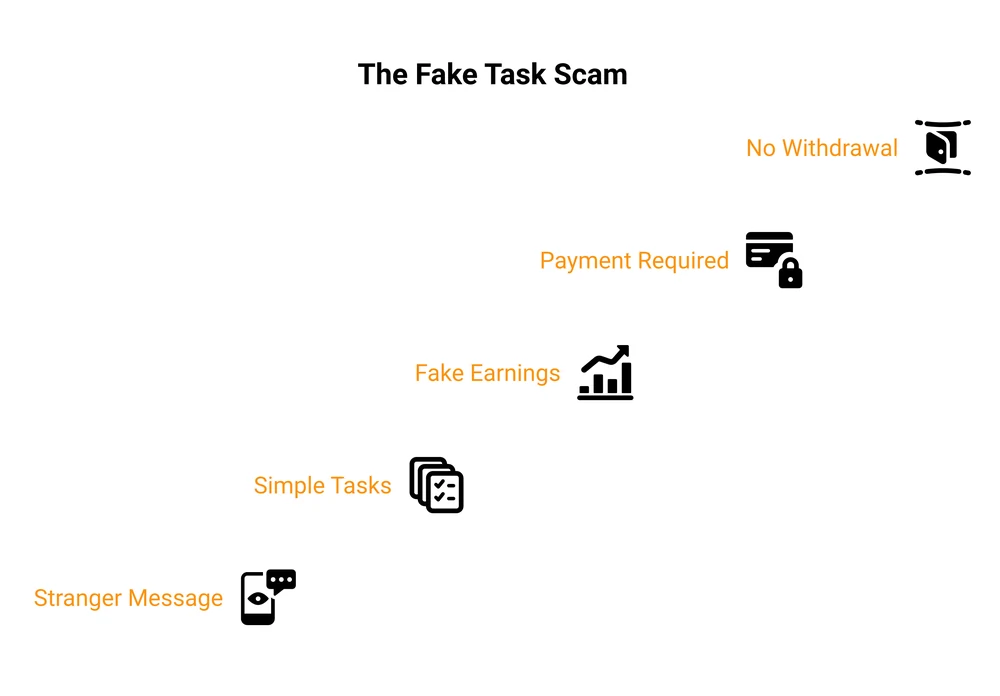
The Federal Trade Commission tracks these closely. Reports of app-based “task” job scams jumped from about 5,000 in 2023 to roughly 20,000 in just the first half of 2024. The pattern is always the same: a stranger messages you, you do simple tasks for “commissions,” then you have to pay to reach the next level and can never actually withdraw.
The actual sellfy.com does not work like that. It never cold-messages you on WhatsApp, never asks for crypto, and never promises easy money for liking posts. Even the people in that r/Scams thread agreed, with one commenter noting “Sellfy itself looks, on the face of it, to be legit.”
What Sellfy actually is
Sellfy is a hosted store builder aimed at creators, founded in 2011 and based in Riga, Latvia. You sign up, upload your products, pick a template, and you have a storefront plus a checkout you can embed anywhere. Lasting that long counts for something in creator tools, where plenty of platforms shut down within a few years.
It handles more product types than most people expect: digital downloads, subscriptions, print-on-demand merch, and physical goods. It is not a marketplace like Etsy, so there is no built-in audience browsing for you. It is also not a merchant of record, so you stay the legal seller and handle your own tax, while Stripe and PayPal move the money.
| Detail | Sellfy |
|---|---|
| Launched | 2011 |
| Type | Hosted store builder |
| Sells | Digital, subscriptions, print-on-demand, physical |
| Payments | Stripe and PayPal |
| Platform fee | 0% on all plans |
| Free plan | No (14-day trial) |
| Trustpilot | 4.1 / 5 (71 reviews) |
So, is Sellfy legit? The trust signals that matter
A few concrete signals tell you whether a platform is safe to trust. Sellfy clears the important ones.
It has been operating for about 15 years, and scams rarely survive that long. Money never sits with Sellfy: card payments run through Stripe and PayPal, two of the most widely used and regulated payment processors, and payouts land in your own connected account. Because you are the seller of record, you keep the customer relationship and the legal standing, not a middleman.
Public reviews back this up. Sellfy holds 4.1 out of 5 across 71 reviews on Trustpilot and 4.5 out of 5 across 32 reviews on Capterra as of mid-2026, which is solid for any software.
One long-time Trustpilot reviewer put it plainly: they had been using Sellfy for over ten years and never really had a problem, selling both digital and physical products. A decade-long track record is the opposite of a scam.
None of that makes Sellfy perfect, and I get into the downsides below. But is it a genuine, safe company to buy from and sell through? Yes, clearly.
The same trust questions come up for every tool, which is why people also look up whether Gumroad is safe or how to protect your digital downloads no matter where they sell.
How Sellfy works and how you get paid
Setup is genuinely quick. You connect Stripe or PayPal, add a product, set a price, and Sellfy gives you a storefront plus buy buttons and embeddable checkout you can drop into a site, a link in bio, or a YouTube description. For merch, its print-on-demand tool prints and ships for you, so you never touch inventory.
Payouts cause a lot of “how does Sellfy pay out” confusion. Sellfy does not hold your money and pay you later like a marketplace does. The customer’s payment goes straight into your connected Stripe or PayPal account at checkout, and those processors follow their own payout schedules (Stripe on a rolling basis, PayPal close to instant).
You are paid by your processor, not by Sellfy, which is part of why the platform is low-risk on the money side. If delivery reliability matters to you, it is worth understanding digital delivery systems before you commit to any platform.
Sellfy pricing and fees: the real catch
Sellfy is honest about its pricing, but the structure has a catch worth knowing before you sign up. There are 3 core plans, plus a custom high-volume tier for sellers over $200,000 a year. All prices below are billed yearly, and paying yearly saves about 25% versus month-to-month.
| Plan | Yearly (per mo) | Month to month | Sales cap per year |
|---|---|---|---|
| Starter | $22 | ~$29 | $10,000 |
| Business | $59 | ~$79 | $50,000 |
| Premium | $119 | ~$159 | $200,000 |
The headline is true: Sellfy charges 0% transaction fees on every plan. You will still pay Stripe or PayPal their standard processing (roughly 2.9% plus $0.30 per sale), because that is the processor’s cut, not Sellfy’s.
The catch is that sales cap. The $22 Starter plan stops covering you the moment you cross $10,000 in yearly sales, which pushes you up to the $59 plan, then the $119 one. For a growing store that is fine, since you are earning more anyway.
For a small or seasonal seller, paying $22 a month before a single sale can sting, and there is no permanent free plan, only a 14-day trial.
What Sellfy does well, and where it bites
The good:
- 0% platform transaction fees, which adds up fast at higher volume.
- Fast setup, people routinely get a live store in under an hour.
- Print-on-demand and subscriptions built in, no extra apps.
- You stay the seller of record with money in your own Stripe or PayPal.
- Upsells and cart features included without a plugin marketplace.
The bite:
- The $10,000 sales cap on the base plan forces an upgrade as you grow.
- A fixed monthly cost hurts when sales are low or seasonal.
- Limited design flexibility compared with a full website builder.
- If you ever leave, you rebuild your store from scratch elsewhere.
- Marketing tools are basic, so most sellers still bring their own email and traffic.
Who Sellfy is (and isn’t) for
Sellfy fits you if you want a hosted store live this week, you sell a mix of digital products, merch, or subscriptions, and you would rather pay a flat monthly fee than a cut of every sale. Creators selling print-on-demand alongside downloads get the most out of it, since that combo is a pain to stitch together elsewhere.
It is a weaker fit if you are on a tight budget and sell only occasionally, if you want pixel-level control over your store’s design, or if you are a high-volume seller who would rather not hit a sales cap. If you mostly sell ebooks or PDFs, it is worth weighing Sellfy against the wider field of platforms to sell ebooks before you lock in a monthly plan.
Sellfy alternatives worth a look
If the monthly cost or the sales cap is a dealbreaker, you have solid options, and they price very differently. Sellfy charges a subscription, Gumroad takes a percentage of every sale, and a cheaper flat-rate tool changes the math again.
| Platform | Ongoing cost | Platform cut per sale | Best for |
|---|---|---|---|
| Sellfy | $22 to $119 / mo | 0% (plus processor) | A fast hosted store with merch and subs |
| Gumroad | $0 / mo | 10% + $0.50 (tax handled) | Starting with zero fixed cost |
| CartMango | Free in beta, then from $10 / yr | 0% (plus processor) | Keeping the most per sale on a small budget |
Fees verified July 2026. I will be upfront: CartMango is my platform, built for solo sellers who want to keep more of each sale without a monthly bill.
Gumroad is the opposite trade, no fixed cost but 10% off the top of everything you sell. Want the full list? I compare seven Sellfy alternatives, including Payhip, SendOwl, and ThriveCart, in a separate guide.
Sellfy FAQ
Is Sellfy safe to use?
Yes. Sellfy has run since 2011, processes payments through Stripe and PayPal, and holds strong ratings on Trustpilot and Capterra. Buyers are covered by the same processor protections as any online store.
Creators have asked “is Sellfy safe” on Quora and Reddit for years, and the consensus is that the platform itself is trustworthy.
Can you make money on Sellfy?
Yes, but Sellfy is a store, not an audience. It gives you the checkout, storefront, and delivery, so making money still depends on you driving traffic and having a product people want. Sellers who already have an audience on YouTube, TikTok, or an email list tend to do best.
How does Sellfy pay out?
Sellfy does not pay you directly. Payments go straight into your connected Stripe or PayPal account at checkout, and those processors pay out on their own schedule. Stripe usually pays on a rolling basis, while PayPal is close to instant.
How much does Sellfy take?
Sellfy takes 0% in platform transaction fees on every plan. Your only per-sale cost is the payment processor’s standard fee, roughly 2.9% plus $0.30 through Stripe or PayPal. The trade is a monthly subscription starting at $22.
Is Sellfy free?
No. Sellfy offers a 14-day free trial but no permanent free plan. After the trial, the cheapest option is the Starter plan at $22 a month billed yearly.
Is Sellfy legit compared with other checkout tools?
Sellfy is as legitimate as its established peers. It sits in the same category as tools like Gumroad and ThriveCart, and the trust questions are the same across all of them, which is why buyers also look up things like whether ThriveCart is legit.
Sellfy is legit. What matters is whether its pricing model fits how you sell.
For the record, I build CartMango, a checkout platform for solo digital sellers. If Sellfy’s monthly plans and sales caps feel heavy while you are getting started, CartMango is free through beta and then starts at $10 a year, with no cut taken from each sale beyond standard Stripe processing. Same job of getting you paid, more of the money stays with you.
About the Author

👋 I’m Welly, founder of CartMango (the site you’re on), a checkout platform for digital product sellers. We’ve previously processed $179M+. I also run BirdSend (email marketing tool, 3.1B+ emails sent). On the side I show other non-techie digital sellers how I use AI workflows to automate 50%+ of my operations. Find me on LinkedIn.
Related Reading
- Sellfy alternatives worth trying: 7 other checkout tools compared side by side
- Is Gumroad safe?: the same trust check, run on Gumroad
- Platforms to sell ebooks: where else to sell your digital products
- How to create a digital download: set up your first product to sell