
To start a newsletter, pick one clear topic and audience, choose an email tool like Kit, Beehiiv, Substack, or BirdSend, set up a signup form, and send a short first issue. Most beginners send weekly. Growth is slow at first. The tool is the easy part. Choosing a focus people actually want is the real work.
Search “how to start a newsletter” and almost every guide hands you the same answer. Sign up for their tool, click these buttons, you are done. The tool takes twenty minutes. That was never the hard part.
The hard part is picking something people want in their inbox, then showing up week after week when barely anyone is reading yet. Most newsletters go quiet in the first two months. The software almost never fails. What fails is the writer, who runs out of things to say, or runs out of patience before the list gets big enough to matter.
I have run email lists for years and sent billions of emails through the tool I built. Below are the parts that actually decide whether it works: choosing a focus, picking a tool, getting your first subscribers, and turning a small list into something that pays you back.
Key Takeaways
- A newsletter is only as good as its focus. Pick one topic and one type of reader before you touch any software.
- The tool barely matters at the start. Kit, Beehiiv, Substack, and BirdSend all send email. Pick one and move on.
- Send a short welcome email the moment someone subscribes, then keep a schedule you can actually sustain.
- Open rates lie now that Apple auto-loads images. Watch clicks and replies instead.
- Your list is an asset. Once people trust you, a newsletter becomes the cheapest way to sell your own products.
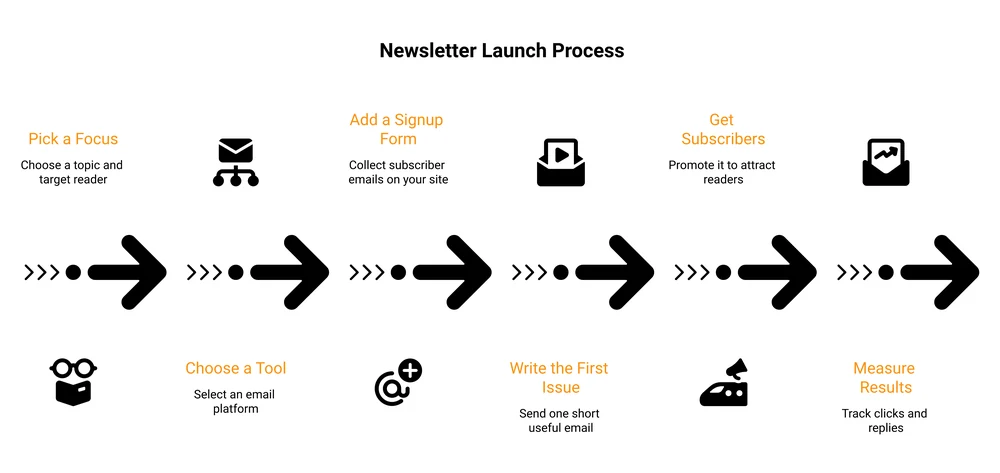
Start with a focus people actually want
Before you compare tools, answer one question. Who is this for, and why would they open it?
That sounds obvious. Most people skip it anyway. They pick a name, grab a logo, sign up for software, and then freeze on issue two because they never decided what the newsletter is about.
A good focus is narrow enough to describe in one line. “Weekly tips for people learning to bake sourdough at home.” “One short case study a week on how small SaaS founders got their first 100 customers.” Notice these name a reader and a promise. Vague beats nothing, but specific beats vague every time.
Pick a topic you can keep writing about for a year without hating it. If you run out of ideas by week three, the topic was too thin. A quick test: can you list twenty issue ideas right now, off the top of your head? If yes, the focus has room. If you struggle past five, narrow it or switch.
If part of your plan is to eventually sell to that list, it helps to know where solo sellers usually leak money before you get there. Welly’s free 5-day Online Selling Mistakes Challenge walks through the five most common ones and how to fix them.
You do not need a huge audience to start. You need a clear reason for one type of person to say yes.
Choose your newsletter tool
Here is the part people overthink. Every email tool does the same core job. It stores your subscribers, sends your emails, and gives you a signup form. The differences matter more later, once you are growing and want automations or paid tiers.
So do not spend three days comparing feature lists. Pick one you can afford, sign up, and start. You can move your list to another tool later if you outgrow it.
A quick honest comparison of the common options, as of 2026-07-03:
| Tool | Free tier | Paid starts at | Best for |
|---|---|---|---|
| Mailchimp | 250 contacts, 500 sends a month | Scales by contacts | General small business email |
| Kit | Up to 10,000 subscribers (1 automation) | $39 a month (1,000 subs) | Creators who want automations later |
| Beehiiv | Up to 2,500 subscribers | $49 a month | Newsletter-first growth tools |
| Substack | Free to start | Takes 10% of paid subscriptions | Writers who plan to charge for content |
| BirdSend | 7-day trial, no free plan | $9 a month (1,000 contacts) | Creators who want simple, cheap sending |
Kit’s free plan is the most generous on subscriber count, though it caps you to one form and one automation. Substack is free until you charge readers, then it keeps 10 percent of every paid subscription. Beehiiv gives you room to grow before you pay.
I will be upfront. BirdSend is my own tool, built for creators who want plain, reliable sending without the bloat of a big marketing suite. I named it in the table because it is a real option, not because you have to use it. Any of these will get your first issue out the door.
Set up a signup form and a simple landing page
Once you have a tool, you need one place for people to subscribe. Your tool gives you a hosted signup form and usually a simple one-page landing page. That is enough to launch. You do not need a full website yet.
Keep the form short. An email field and one line explaining what they get and how often. Every extra field you add lowers the number of people who finish signing up.
Put the form where people already are. Pin it on your social profiles. Add it to the end of your blog posts. Link it in your bio. If you have a website, place it in the header and at the bottom of your best pages.
The moment someone subscribes, send a welcome email. This is the highest-open email you will ever send, because they just raised their hand. Tell them what to expect, when the next issue lands, and give them one useful thing right away. A short automated welcome email sequence does this on autopilot so you are not sending each one by hand.
Plan and write your first issue
A newsletter issue does not need to be long. It needs to be useful and consistent.
Most issues share the same basic parts. A subject line, a short opening, the main content, one clear call to action, and a footer with your name and address. Beginners overbuild this. Start plain. A few hundred words that teach one thing or share one story beats a glossy template with nothing to say.
Pick a cadence you can hold. Weekly is the most common choice and the usual advice for beginners, but a monthly newsletter you actually send beats a weekly one you abandon. Consistency matters more than frequency. Readers forgive a small list. They do not forgive going quiet for three months.
Write like you are emailing one person, not broadcasting to a crowd. Use their language. Cut the throat-clearing. If you would not say a sentence out loud to a friend, cut it.
For the first issue, keep the scope tiny. Introduce yourself in two lines, deliver one genuinely useful thing, and tell them what is coming next. That is a complete issue. You can get fancier once you have a rhythm. Early on, promoting your work consistently matters far more than making any single issue perfect.
Get your first subscribers
This is where most beginners get discouraged. The first 100 subscribers are the slowest. There is no list yet, no momentum, no social proof. You are asking people to trust something with almost no track record.
That is normal. Everyone starts at zero. One beginner on Reddit’s r/Emailmarketing asked the exact question most new writers have: if you do not already have an email list, how does any of this even work? The honest answer is that you build the list by hand at first, one person at a time.
Where those first people come from:
- Your existing contacts. Tell friends, past clients, and your social followers directly. A personal message converts far better than a public post.
- Your content. Every post, video, or comment you make should point back to the signup form.
- Other people’s audiences. A shout-out swap with another small newsletter in a related niche is one of the fastest early channels. This is worth learning properly, because newsletter cross-promotion compounds as you grow.
Do not buy lists. Do not add people who did not opt in. It hurts your delivery and, in the United States, it breaks the law (more on that below). The slow way, earning each subscriber, is the only one that lasts.
Send it, then watch the numbers that matter
You hit send. Now what do you actually look at?
For years, everyone watched open rate. Then Apple changed things. Since 2021, Apple’s Mail Privacy Protection auto-loads images on many devices, which fires the open pixel even when nobody read the email. So open rate is now inflated and unreliable. Raw averages still get quoted at 30 percent or higher, but treat any open number as soft.
Watch clicks and replies instead. A click means someone wanted more. A reply means someone cared enough to write back. Click-through rates for newsletters usually sit in the low single digits, often just a few percent. If people are clicking and replying, your list is healthy, whatever the open number says.
There is also a legal layer, and it is simpler than it sounds. In the US, the CAN-SPAM Act sets a few clear rules for any commercial email. According to the FTC’s CAN-SPAM compliance guide, you must:
- Never use false or misleading “from” details or subject lines.
- Include a real physical mailing address in every email.
- Give a clear, working unsubscribe link.
- Honor unsubscribe requests within 10 business days.
Every reputable email tool builds the unsubscribe link and address footer in for you, so you mostly get this for free by using one.
Common newsletter mistakes to avoid
Most first newsletters fail in predictable ways. Here are the ones worth dodging from day one.
| Mistake | Why it happens | Fix |
|---|---|---|
| Vague topic | Trying to appeal to everyone | Name one reader and one promise |
| Going quiet | Burnout from an over-ambitious schedule | Pick a cadence you can hold for a year |
| Perfectionism | Waiting for the “perfect” first issue | Ship something small and useful now |
| No welcome email | Focusing only on the signup form | Automate a welcome the moment they join |
These come down to discipline, not software. Stay clear, stay consistent, and you dodge most of them.
How to make money from your newsletter
A newsletter is a direct line to people who chose to hear from you. That is rare and valuable. Once you have earned some trust, there are a few honest ways to make it pay.
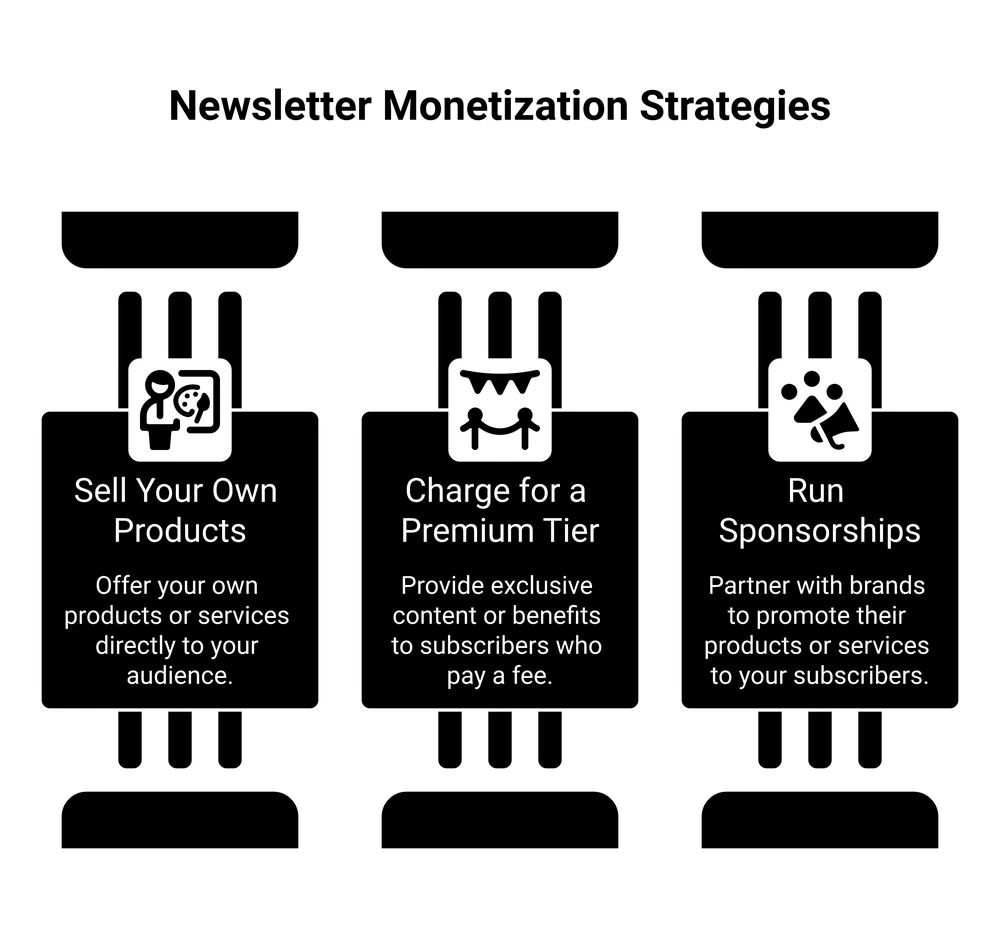
- Sell your own products. Digital products convert well to a warm list because these readers already know you. If you are stuck on what to offer, browse digital product ideas or start simple and make and sell an ebook built from your best issues.
- Charge for a premium tier. Free issues build the audience, a paid tier serves your biggest fans.
- Run sponsorships. Once your list is a few thousand engaged readers, relevant brands will pay to reach them.
This works even at modest size. Eric Newcomer left Bloomberg in 2020 to start his tech newsletter from scratch, and grew it to more than 75,000 free subscribers with around 2,000 paying members, as reported by Axios. Worth noting: a good chunk of his revenue now comes from a conference and a podcast, not the newsletter alone. The list was the foundation that made the rest possible.
When you are ready to sell, you need two things. A way to email your list, which is your newsletter tool, and a checkout to take the money. I run BirdSend for the email side and CartMango for the checkout side. Plenty of other tools do each job. The point is that the newsletter comes first. The list is what everything else is built on.
FAQ
What are the 8 basic parts of a newsletter?
A common breakdown is the subject line, a preheader, a header or banner, the main body content, a clear call to action, any promotional block, a footer with your name and mailing address, and the unsubscribe link. Lists vary from six to twelve parts, so treat this as a checklist, not a rule.
How often should I send my newsletter?
Weekly is the most common cadence and the usual beginner recommendation. That said, consistency beats frequency. A monthly newsletter you always send builds more trust than a weekly one you abandon after a month. Start at a pace you can hold, then speed up if you want to.
What is the 30/30/50 rule?
It is a loosely defined cold-email guideline, not a newsletter rule. The rough idea: open with personalization, spend the middle on real value, and finish with a clear call to action. People quote the split different ways and it does not always add up cleanly, so treat it as a rough guide, not a formula. For a newsletter your readers already opted into, you do not need it.
How much does it cost to start a newsletter?
You can start for free. Kit, Beehiiv, and Substack all have free tiers, and Substack takes a cut only when you charge readers. Paid plans on simple tools start around $9 a month. Your only real cost early on is your time.
Do I need an existing audience to start?
No. Everyone starts at zero. An existing following makes the first 100 subscribers faster, but plenty of large newsletters were built from scratch by writing consistently and telling people about it, one at a time.
You do not need to get everything right to start a newsletter. Pick a clear focus, choose any decent tool, send a short first issue, and keep showing up. The writers who win are rarely the most talented. They are the ones who did not quit before the list got big enough to matter.
About the Author

👋 I’m Welly, founder of CartMango (the site you’re on), a checkout platform for digital product sellers. We’ve previously processed $179M+. I also run BirdSend (email marketing tool, 3.1B+ emails sent). On the side I show other non-techie digital sellers how I use AI workflows to automate 50%+ of my operations. Find me on LinkedIn.
Related Reading
- How to promote digital products: get eyes on your newsletter and your work
- How to make and sell an ebook: turn your best issues into a product
- Lead magnet email sequence: build a welcome sequence that converts
- 100 digital product ideas: what to sell to your list once it grows